A Socio-Economic Analysis of Dublin’s South-West Inner City
“A Socio-Economic Analysis of Dublin’s South-West Inner City” provides the most in-depth study of the social and economic conditions in the SWIC undertaken to date, drawing on a wide range of data sources, including the results of the 2022 Census, published administrative data and a survey of students in the area.
Key findings:
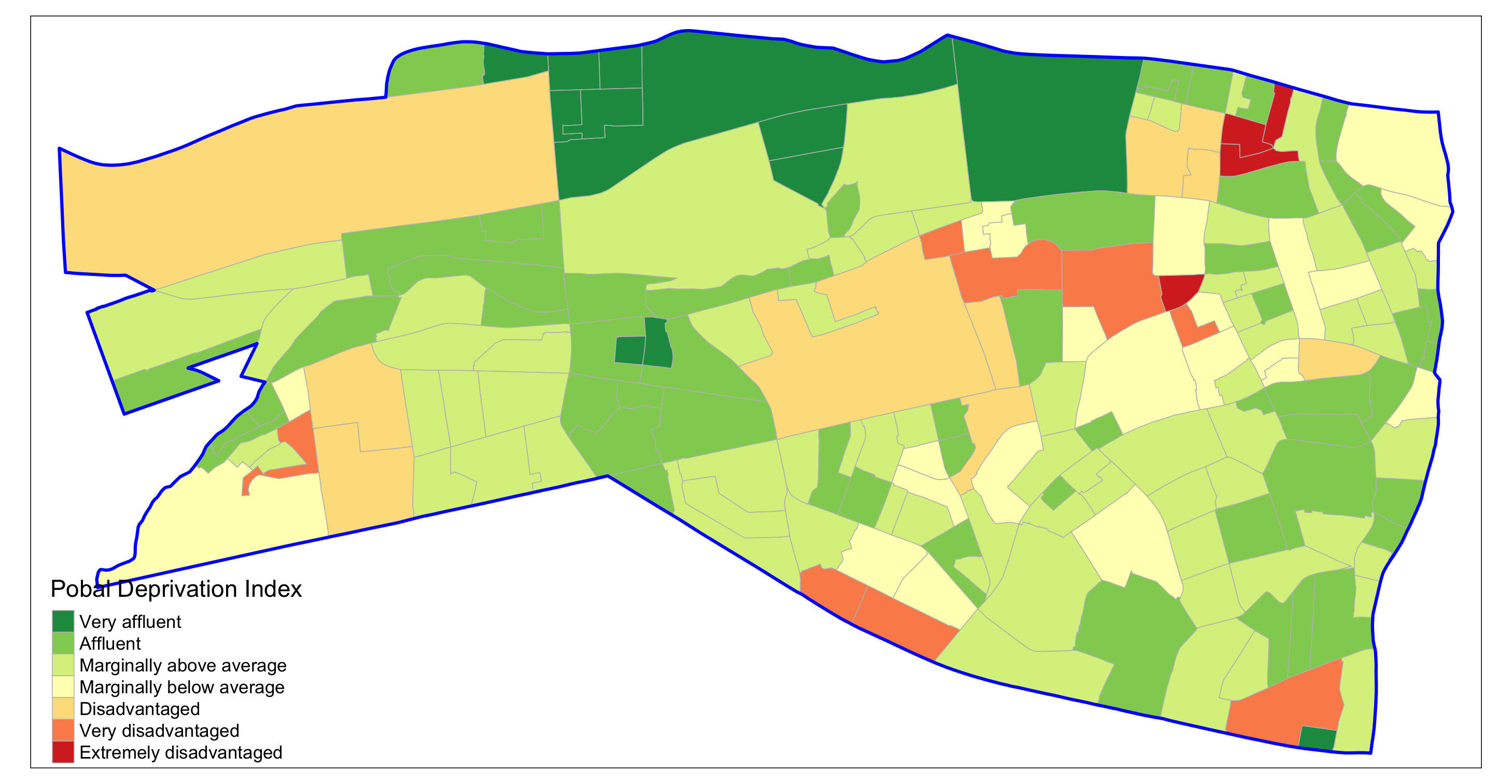
Almost half of those living in a severely deprived part of Dublin’s inner city lives in the SWIC.
- Despite making up just a quarter of the inner-city population, almost half of those living in a part of the inner city classified as Extremely or Very Disadvantaged by the official Pobal Deprivation Index live in the SWIC.
- This has important economic consequences, with the cost of additional spending on public services that arise from poverty and deprivation estimated at between €26 and €60 million per year in the SWIC alone.
Average incomes in the SWIC are substantially lower than Dublin as a whole.
- Average gross (pre-tax) household income for the SWIC was €60,036 in 2022: 16 per cent lower than the Dublin average.
- Average net (after tax) household income for the SWIC was €49,900 in 2022: 15 per cent lower than the Dublin average.
The number of drug poisoning deaths per capita in the SWIC is at least twice the national average.
- There were 22 drug poisoning deaths in the Dublin South City Local Health Office (LHO) area in 2021 (the latest year available). This corresponds to a mortality rate of 0.145 per 1,000 of population: a third higher than the Dublin average and double the national average.
- As the Dublin South City LHO area also includes parts of Terenure, Churchtown and Rathfarnham the figure for the SWIC itself is likely substantially higher.
Education
- Less than four-in-ten children living in the SWIC go to secondary school in the area. This is the lowest of any urban electoral area in the country. It contrasts with primary level where local enrolment rates look very similar to other parts of the city, county and country as a whole.
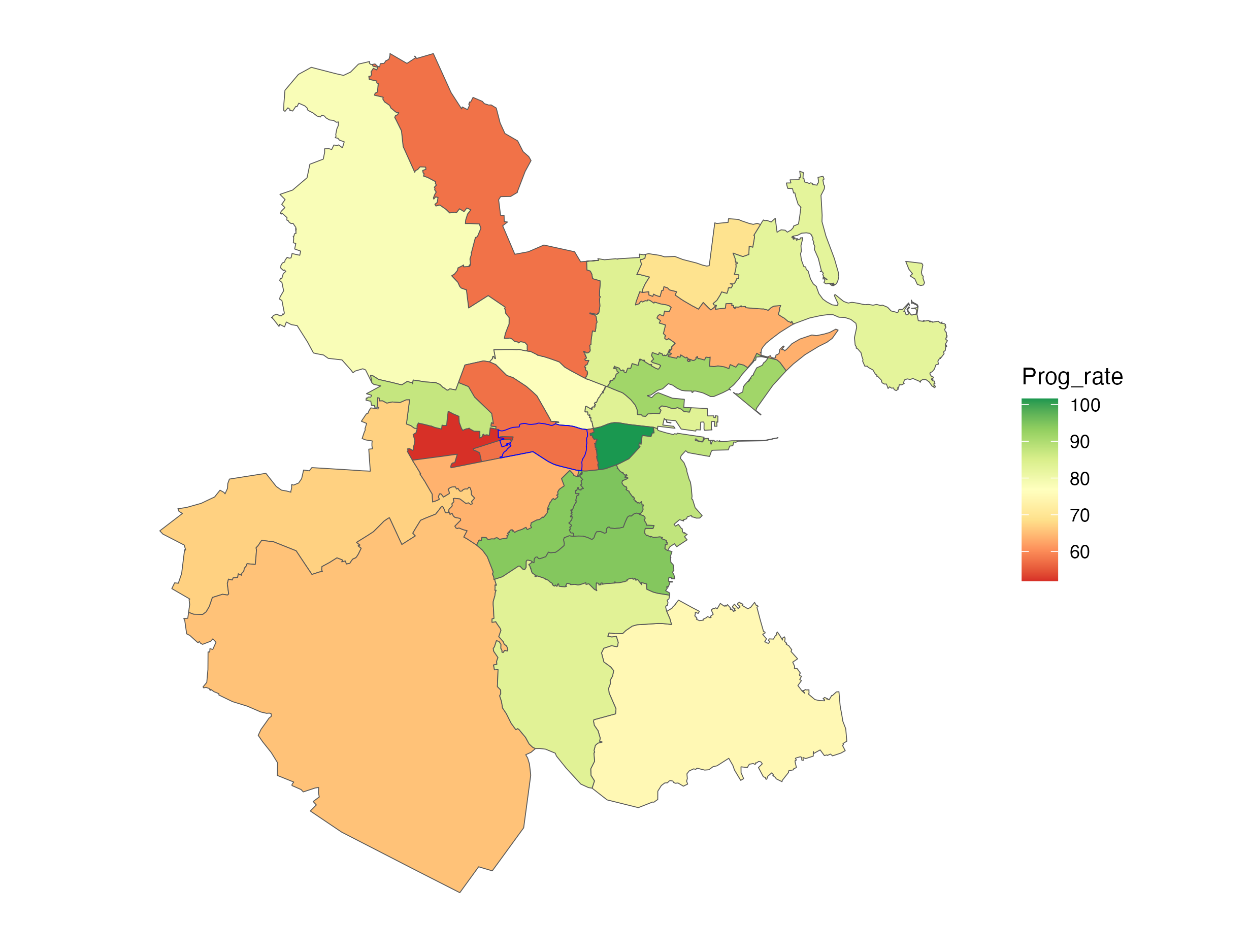
- Third level progression rates for students in these schools are less the half the national average. Just 36% of students who sat the Leaving Certificate at schools in the SWIC went on to third level in 2024. This progression rate is less than half of that in Dublin (81%) or nationally (80%).
- Raising progression rates to the national average would result in more than €3 million in extra lifetime earnings and €1.8 million in extra tax revenues for the 2024 cohort of leaving certificate students alone. This amounts to around €100,000 in extra lifetime earnings (net of tax) and €62,000 in extra tax revenues for the Exchequer for each additional student who goes onto third-level education.
Crime
- The crime rate in the SWIC is more than twice the national average. The SWIC largely overlaps with the Kevin Street An Garda Síochána (AGS) District which recorded 106.7 crimes per 1,000 of population in 2024. This was more than twice the national average of 40.4 per 1,000.
- Crime in the SWIC imposes costs of at least €60 million a year. Conservative estimates suggest that crime in the Kevin Street District is associated with costs of at least €60 million per year: €21 million from policing, €10 million from the prison system and €30 million in wider economic and social costs.
Physical activity and sporting participation
- 92 per cent of secondary school students and 78 per cent of primary school students in Dublin’s South-West Inner City are failing to meet Government and World Health Organisation guidelines of being physically active daily.
- One-in-five primary school students and one-in-four secondary school students in the SWIC report never participating in organised sport outside of school: more than 60% above the national average. Half of primary school students who do not participate say it is because there are not adequate facilities in the SWIC.
- There are currently no public pitches within the Grand Canal and North Circular Road, with just 2 of Dublin City Council’s 248 public pitches in the SWIC. Both of these pitches are located in East Timor Park at the south-west edge of the SWIC, inaccessible for the vast majority of those living in the SWIC. This corresponds to 22,427 people per playing pitch in the SWIC: almost 10 times higher than the average of 2,389 for Dublin City as a whole. While two new pitches are planned for the area, these will still leave the SWIC with just 1 pitch per 11,214 people.